
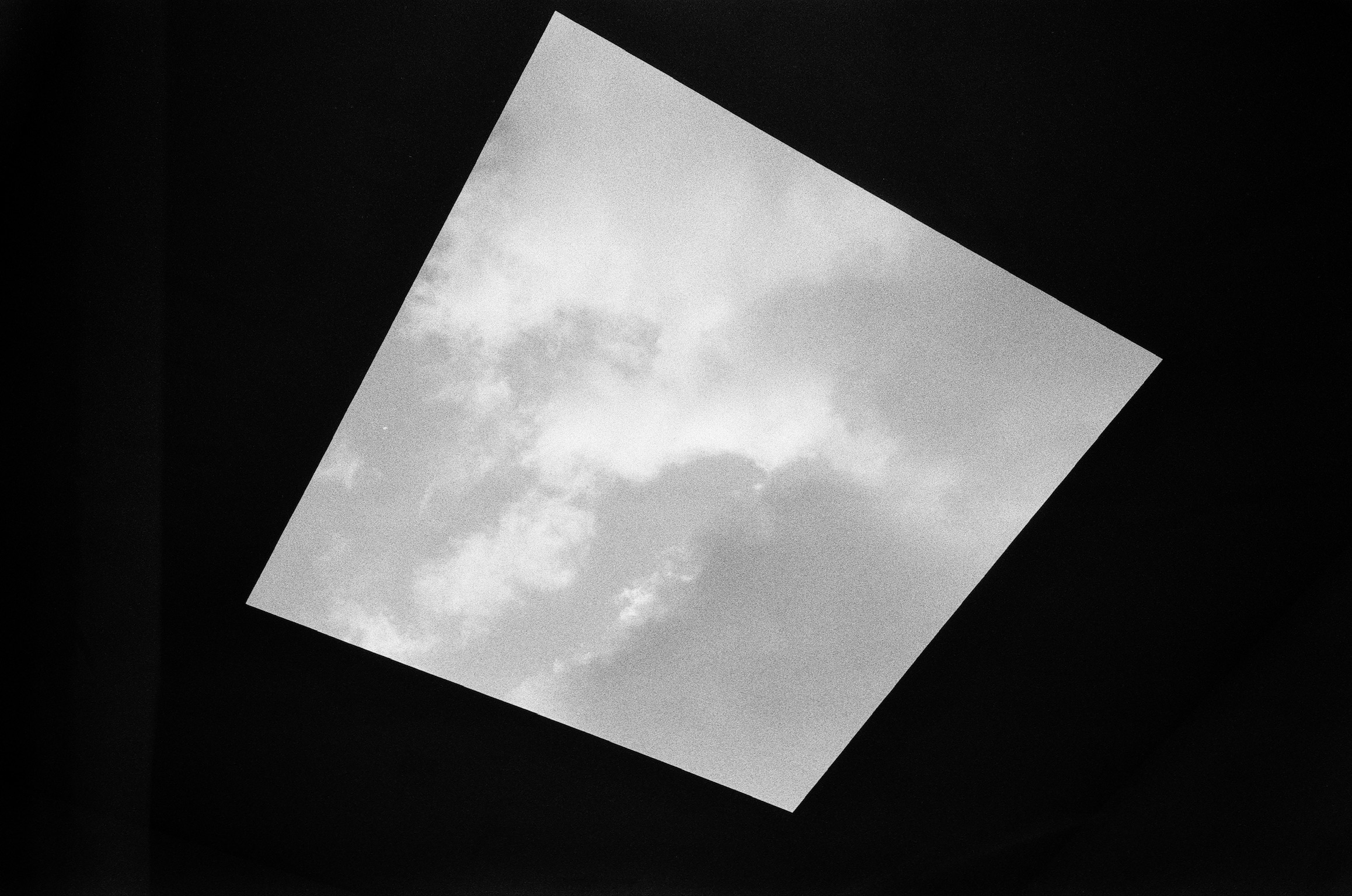
I had become to myself a vast problem. - Augustine
How unusual it is to become someone. The self arrives as a kind of belatedness, composed, at first, by the people and accidents it encounters along the way. We have a brief period of formation where we lack autonomy, mostly acquiring the preferences and beliefs of those nearby. When we enter the world of choice, it is these inborn and acquired characteristics that shape our decisions.
I remember having the feeling that time was being spent on me before I had the vaguest sense of who I was, or what any of this was about. Slowly, some characteristics emerged (or were implanted, who knows), the clearest of which was a desire to understand reality. This is unfortunate, because reality is, perhaps, unknowable. This concept is made less vertiginous by a sense that, while reality might be unknowable, we can at least take refuge in ourselves. I'm not so sure.
My formative years (and I consider all of them formative) have been spent seeking and grasping. My first love was science. There is something deeply consoling about the scientific method, how the world submits to the right questions. Our willingness to adopt a mechanistic worldview has led to progress that would have formerly appeared indistinguishable from magic. The ability to control nature implies a level of understanding. We have become very good at answering "how" questions, though I still feel nagged by those less accessible questions of "why."
This feeling. What is one to do with it? A common, albeit less rational, way to approach the question of "why" is to go inward. If the natural scientist studies reality through external observation, then interior experience is the domain of the psychoanalyst, the metaphysician, the philosopher, and the mystic. Where the scientist finds reality at the end of an instrument, the mystic finds it (or loses it) at the end of the self. But selfhood is a strange beast. The more I let it go, the closer I feel to reality.
I've never found the separate self particularly stable. The self and its many masks are occasionally useful for relating, but shouldn't be mistaken for who we are. "I am a scientist" is a way of saying "I'm rational, intelligent, certainly not fooled, the way many are." It creates an ingroup of peers. It creates an outgroup of people whom, if we are not careful, we may feel superior to. And that desire to be superior, a desire to be separate, points to deeper questions, aspects of the unconscious we may not be paying much attention to.
Why do we feel such a need to be something so definable? The late meditation teacher Rob Burbea offers a long list of the identities one might wear: lover, mystic, scholar, preacher, clown, vampire, werewolf, healer, fugitive, lone soldier in a forever war, and concludes:
Some of those I am or have been in my life conventionally. All of them mythically. None of them really.
And yet here we are, suffering in them, dying in them, loving through them. The self is, perhaps, the root of all suffering and, this is the challenging part, a source of genuine delight. And this is what makes me so skeptical of it as something stable. Our self is an entity that will die. It is the thing in the person we love that we identify with. Yet in both cases, it is something that is constantly changing, dynamic, responding, and for all intents and purposes, futile to try to pin down. It dies and is reborn constantly. Nondual traditions would call it an illusion, and to recognize that illusion would be to free ourselves from the greatest delusion. In doing so, we would be ultimately free. I agree, though I would also be wholly bored by a world where selfhood didn't manifest in all the ways Rob describes above.
This isn't to suggest that human differences are illusions. The instability of the separate self may make cultural plurality the most precious thing, one of the richest ways reality differentiates itself through human life. These countless interpretations of being guard against the flattening of existence. The deeper question may be whether we really want a world without difference, whether we truly wish to break the perennial spell. This, for me, is the fundamental paradox of it all, and perhaps what makes the self an interesting beast. The closer I approach the self, the more it seems an ephemeral, shapeshifting entity that may not really exist at all. At the same time, to abandon it is to suggest that the ways in which it manifests are irrelevant and I'm not sure they are. The self may be the greatest fiction we have ever agreed to believe in, but also a necessary one.
Introspection is imagined as a potential shortcut to certainty. This is the false privilege of inner life, the assumption that whatever else is opaque, the self at least is not. The external world is vast and only partially available, whereas the self appears near and accessible. But is it?
Augustine pursued inwardness to the point of undoing. He was a master of endurance and furious psychological attention. He kept finding that as he approached the self, it receded. He writes, at a turning point in the Confessions:
I had become to myself a vast problem.
Still, he kept going. The further inward he traveled, the more the ground gave way, until he arrived at a groundless place:
Thou wast more inward to me than the most inward part of me; and higher than my highest reach.
His conclusion is that the self is not the innermost thing. It is more like a surface, beneath which something lives that cannot be fully grasped. For the Christian mystics, this is the domain of God.
Eckhart, approaching from a different direction:
A human being has so many skins inside, covering the depths of the heart. We know so many things, but we do not know ourselves. Why, thirty or forty skins or hides, as thick and hard as an ox's or bear's, cover the soul. Go into your own ground and learn to know yourself there.
In theological language, inwardness pursued does not deliver the self. It opens questions the self cannot answer about itself. Our grasping and all the forms it takes may be nothing more than an attempt to stand on stable ground, or more accurately, the inability to live with the idea that the ground does not hold.
Perhaps we are composed of open questions, most of which will and should remain open. That may be the spiritual opposite of the stable self. To name a thing is already to reduce it, to mistake the map for the terrain. Here lie the great mysteries, the texture and strangeness of life, and all those unstable things we so badly want to pin down. I wouldn't be so sure they need an answer.